


In regulated clinical environments, speed is never the primary goal.
Reliability is.
This is why organisations hiring for Clinical Data Analytics roles behave differently from most tech hiring teams. They optimise for risk reduction, not volume—and this shapes how teams are built, evaluated, and retained.
This edition looks at what makes clinical data teams reliable, and why reliability—not talent alone—defines long-term success.
Why Regulated Environments Change Everything
Clinical data influences:
• Patient safety decisions
• Regulatory approvals
• Long-term treatment outcomes
Mistakes don’t just affect timelines—they affect credibility and compliance. As a result, teams are designed to minimise uncertainty at every step.
This context explains why hiring and deployment feel conservative to many candidates.
The Cost of Hiring Underprepared Talent
When underprepared professionals are deployed, teams absorb the cost through:
• Repeated review cycles
• Missed timelines
• Increased audit pressure
• Senior resource diversion
Over time, this cost outweighs the benefit of faster hiring. That’s why reliability is prioritised over availability.
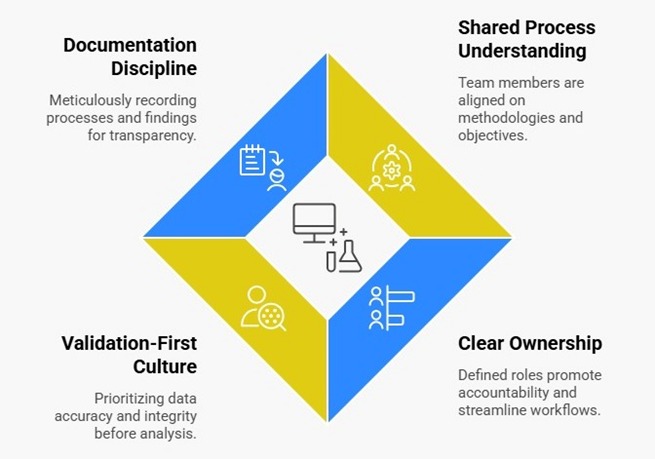
What Reliable Clinical Data Teams Have in Common
Reliable teams consistently demonstrate:
1. Shared Process Understanding
Team members align on:
• Trial objectives
• Data flow
• Review expectations
This reduces misinterpretation and rework.
2. Clear Ownership
Reliable teams know:
• Who owns which datasets
• Who validates what
• Who signs off
Ambiguity is treated as risk.
3. Validation-First Culture
Validation is not a phase—it’s embedded thinking.
Teams that validate continuously:
• Catch issues earlier
• Reduce downstream pressure
• Build regulatory confidence
4. Documentation Discipline
Reliable teams document decisions, assumptions, and changes clearly—ensuring continuity even when people change.
Why Organisations Prefer Talent Pipelines
Many organisations are moving away from one-off hiring toward structured talent pipelines because pipelines:
• Reduce onboarding uncertainty
• Improve deployment consistency
• Create predictable outcomes
This approach benefits both employers and professionals who want stability and growth.
What This Means for Professionals
For professionals, reliability creates:
• Faster trust
• Earlier responsibility
• Longer-term career stability
Those who demonstrate reliability are retained, promoted, and relied upon—even in uncertain markets.
Closing Thought
In Clinical Data Analytics, being capable is not enough.
You must be dependable in regulated conditions.
Teams are built around trust—and trust is built through consistency, accountability, and judgement.