


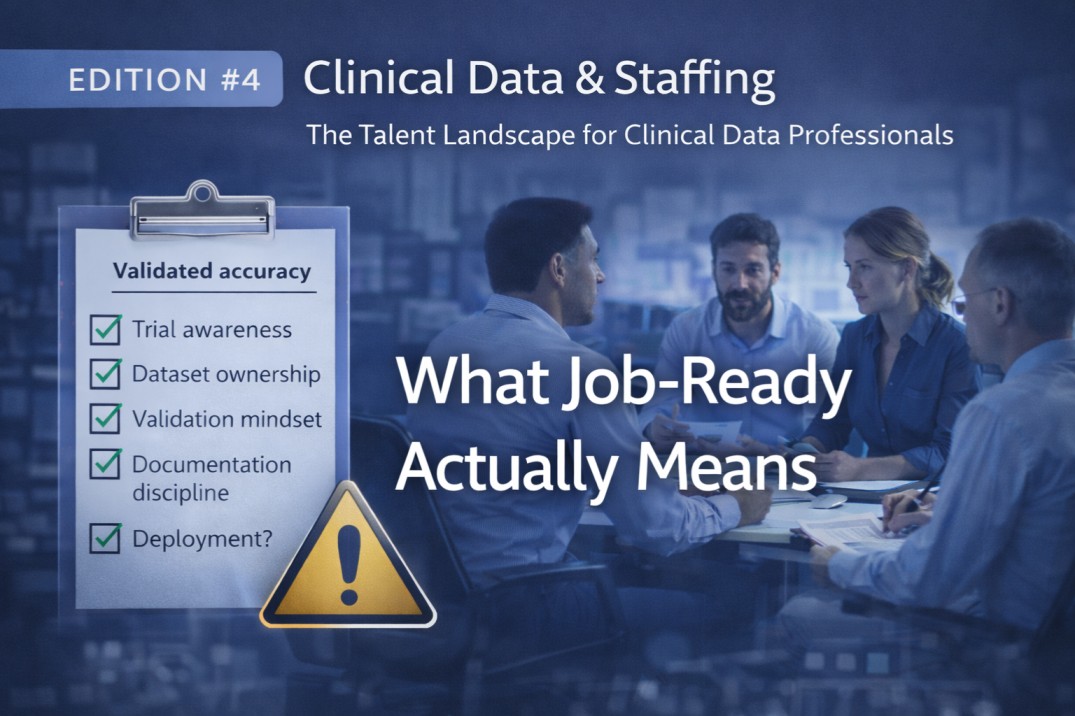
“Job-ready” is one of the most overused phrases in Clinical Data Analytics.
It appears in course descriptions, resumes, and interview answers—yet hiring outcomes suggest a very different reality.
This edition breaks down what job-ready actually means in clinical analytics, and why many candidates who complete training still struggle to convert interviews into roles.
Why Job-Ready Is Often Misunderstood
Most candidates equate job readiness with:
- Completing a course
- Knowing tools and commands
- Holding certifications
In regulated clinical environments, readiness is defined differently.
It is not about how much you’ve learned—it’s about how safely you can operate within a trial workflow.
What Readiness Looks Like in Real Teams
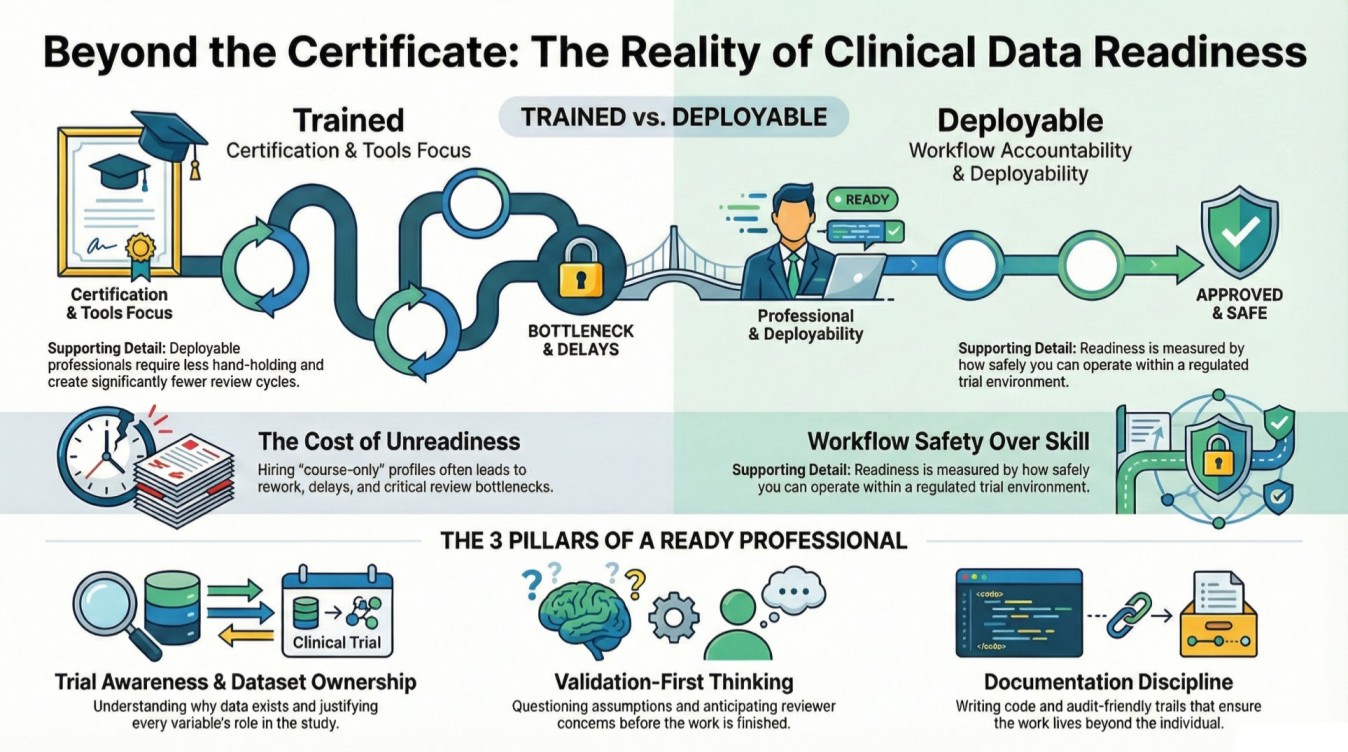
Hiring managers assess readiness through behaviour and thinking patterns, not labels.
1. Trial Awareness
Job-ready professionals understand:
- Why the trial exists
- What the data represents
- How their work fits into the larger study
Candidates who cannot connect data to trial intent appear disconnected from real work.
2. Dataset Ownership
Being job-ready means being able to say:
- What this dataset contains
- Why each key variable exists
- How it was derived
Ownership goes beyond execution. It includes confidence and accountability.
3. Validation Thinking
Job-ready professionals think about validation while working—not after.
They:
- Question assumptions early
- Cross-check logic naturally
- Anticipate reviewer concerns
This mindset reduces downstream risk.
4. Documentation Discipline
Clinical work lives beyond the individual.
Job-ready professionals:
- Document decisions clearly
- Write code that others can understand
- Leave audit-friendly trails
Poor documentation is a common early-career failure point.
The Difference Between Trained and Deployable
Many candidates are trained.
Fewer are deployable.
Deployable professionals:
- Require less hand-holding
- Integrate faster into teams
- Create fewer review cycles
This distinction heavily influences hiring decisions, especially in regulated environments.
Why Teams Hesitate to Hire “Course-Only” Profiles
Hiring managers have seen the cost of overestimating readiness:
- Rework
- Delays
- Review bottlenecks
As a result, teams prefer candidates who show process awareness and responsibility, even if they need time to grow technically.
How Candidates Can Self-Assess Readiness
A simple test:
- Can you explain your work to a reviewer?
- Can you justify your decisions?
- Can you identify risks before they’re pointed out?
If not, more learning alone will not solve the problem.
Closing Thought
Job readiness in Clinical Data Analytics is not a milestone.
It is a transition—from learning to responsibility.
Candidates who recognise this shift early progress faster and with fewer setbacks.